
When someone's heart stops, what happens in the first few minutes matters most. Cahaba Valley Fire District teaches CPR, AED and first aid classes for our community, following American Heart Association (AHA) guidelines.
When someone's heart stops, what happens in the first few minutes matters most. Cahaba Valley Fire District teaches CPR, AED and first aid classes for our community, following American Heart Association (AHA) guidelines.
No classes are scheduled right now. Request information and we'll let you know when the next class is set, or ask about a class for your group.
| Sun | Mon | Tue | Wed | Thu | Fri | Sat |
|---|---|---|---|---|---|---|
| 1 March | 2 March | 3 March | 4 March | 5 March | 6 March | 7 March |
| 8 March | 9 March | 10 March | 11 March | 12 March | 13 March | 14 March |
| 15 March | 16 March | 17 March | 18 March | 19 March | 20 March | 21 March |
| 22 March | 23 March | 24 March | 25 March | 26 March | 27 March | 28 March |
| 29 March | 30 March | 31 March |
There are no classes open for registration right now. Please check back, or request information.
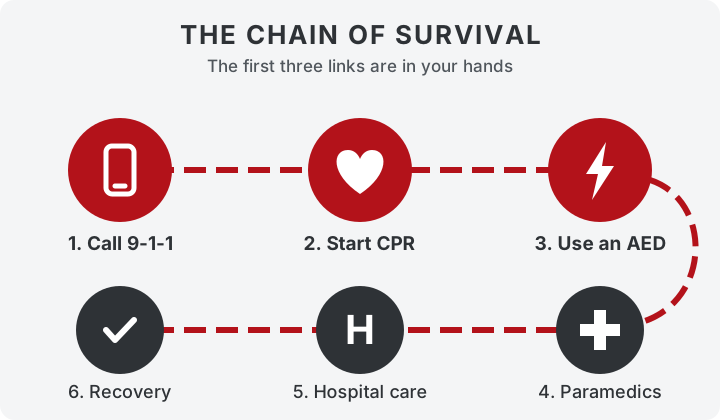
The American Heart Association describes the steps that give a person in cardiac arrest the best chance to live. The first three are in the hands of bystanders.
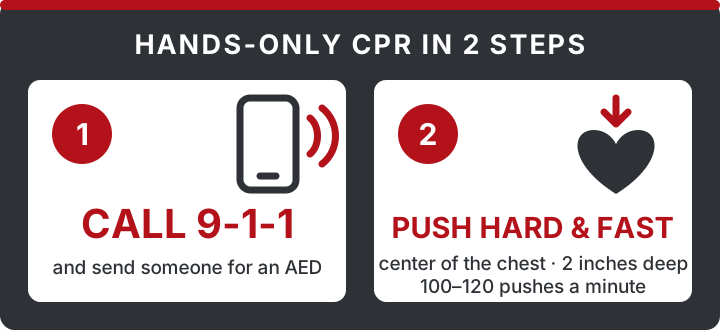
Hands-Only CPR is CPR without mouth-to-mouth breaths. It is recommended for anyone who sees a teen or adult suddenly collapse.
For infants and children, and for adults who collapse from drowning, a drug overdose or a breathing problem, CPR with breaths is recommended. Our classes teach both.
An automated external defibrillator (AED) is a portable device that can shock the heart back into a normal rhythm. AEDs are made to be used by anyone: turn it on and follow the voice prompts. Put the pads on the bare chest, make sure no one is touching the person when the AED says to shock, and then go right back to CPR.
Find out where the AEDs are at your work, school, church and gym before you need one.
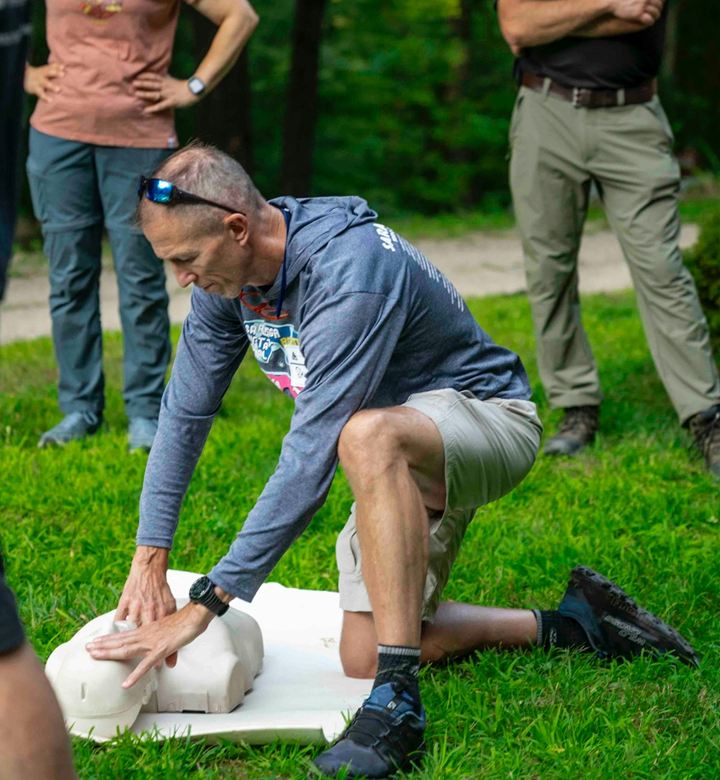
AHA course completion cards are valid for two years. Want a class for your business, church, school or neighborhood? Use the request form below.
Alabama law protects people who give emergency care, including CPR and AED use, in good faith and without pay. Don't let fear of doing something wrong stop you from helping.
Have a question, or want a class for your business, church, school, HOA or civic group? Tell us what you need and our Community Risk Reduction team will be in touch.
The American Heart Association strongly promotes knowledge and proficiency in all AHA courses and has developed instructional materials for this purpose. Use of these materials in an educational course does not represent course sponsorship by the American Heart Association. Any fees charged for such a course, except for a portion of fees needed for AHA course materials, do not represent income to the Association.